
The four pillars of food security are availability, accessibility, utilization, and stability. Availability means with having enough food available. Accessibility deals with having the economic and physical means to access food. Utilizations refers to using and handing food in a safe in proper manner so as to fulfill the requirements of nutrition, hygiene, and health.Continue reading “A Closer Look at the Four Pillars of Food Security”
Author Archives: Blythe_Bath
Hunger Awareness Week
November 13-21 2021 marks the annual week for hunger and homelessness awareness. During this week, put in extra effort to volunteer, donate, and educate in order to support people facing hunger or homelessness. Or, look below for additional ways to help fight hunger this week: Donate food to a food bank Volunteer at a foodContinue reading “Hunger Awareness Week”
Favorite Holiday Recipes

Holiday season is officially here! Thanksgiving, Christmas, and New Years all finish out 2021 with fun, food-filled festivities. Click on each picture to find the recipes for our favorite allergy-friendly treats to impress guests this holiday season:
Halloween with Food Allergies

With Halloween right around the corner, its time to put out your teal pumpkin! Many Halloween treats contain allergens that aren’t safe for kids with food allergies. While some parents may opt to let their kids “trade in” their candy at the end of the night for safe treats or alternative toys, many neighborhoods haveContinue reading “Halloween with Food Allergies”
The Consequences of Food Insecurity

Food insecurity has many long term negative effects on families. From decreased nutrition to higher risks of disease, food insecurity can change a person’s life for the worse. Food insecurity is not just a matter of hunger; rather, it is a matter of education, mental health, physical health, and public safety. 1. Poor nutrition FamiliesContinue reading “The Consequences of Food Insecurity”
Food Allergy Myth Busters

Today we are going to debunk 9 common food allergy myths and misconceptions. Slide the bar to the right on each tile to reveal that myth and to the left to reveal the fact. Article sources: https://www.foodallergy.org/resources/food-allergy-myths-and-misconceptions https://badgut.org/information-centre/a-z-digestive-topics/10-myths-about-food-allergies/
Food Allergy Facts and Statistics

The following information is directly quoted from FARE. If you cannot view the article on your screen, please click the button to download in order to view.
A Closer Look at the Most Common Allergens

The top 9 allergens in the U.S are dairy, eggs, soy, peanuts, nuts, wheat, shellfish, fish, and sesame. Allergen Applies to: How common? Found in: Kids or adults? Worst part of the allergen? Dairy cow’s milk and other animal milk (goat, sheep, etc.) 6.1 million Americans cheese, yogurt, butter mostly kids, typically outgrown uncooked milkContinue reading “A Closer Look at the Most Common Allergens”
Donation Progress Update!
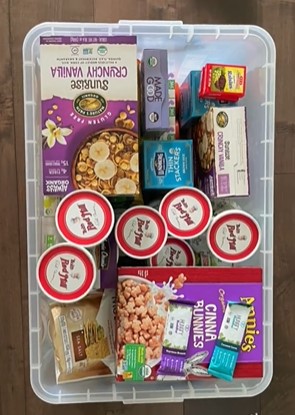
Hi everyone! This week marks our 8th week collecting allergy-friendly food donations. We have received an outpouring of volunteers who donated over 560 food items! We are halfway to our goal for the 2021-2022 year of reaching 1,000 food donations, so every donation counts. Sign up today on the “Get Involved” page to contribute toContinue reading “Donation Progress Update!”
Understanding the Basics of Food Intolerances

What is a food intolerance? A food intolerance, often called a food sensitivity, occurs when a person has difficulty digesting certain foods. Food intolerances, which are related to the digestive system, are not the same as food allergies, which are related to the immune system. What causes a food intolerance? Different food intolerances are causedContinue reading “Understanding the Basics of Food Intolerances”
 Food Allergy Allies